
Weight Loss and Menopause: What’s Really Happening to Your Body?
Aug 20, 2026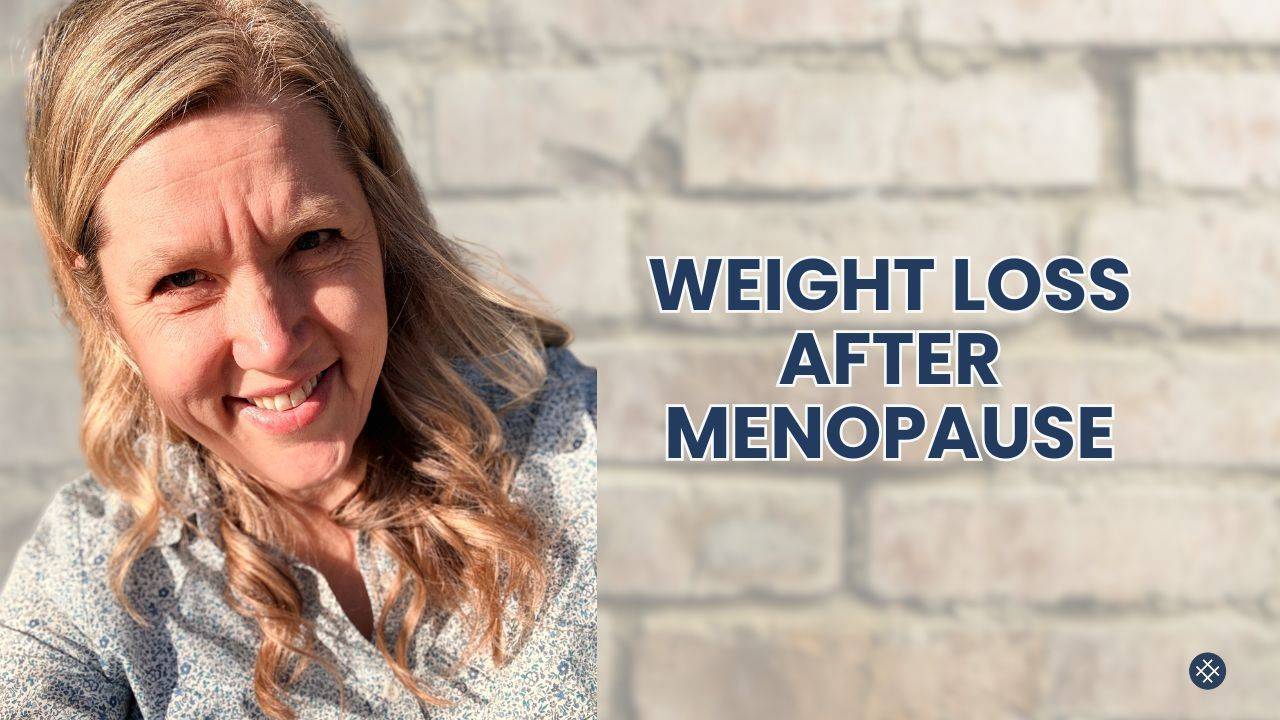
If you’ve been blaming menopause for your weight gain, you’re not alone. So many women reach their 40s and 50s believing that once menopause arrives, their metabolism will suddenly shut down, their body will turn against them, and weight gain will become inevitable.
But the truth about weight loss and menopause is more nuanced than the story we’ve been told.
Some of the changes you’re experiencing are absolutely real. Hormones change. Your body may redistribute fat. Your sleep may change. Your energy may change. But menopause itself is not the whole explanation for what is happening to your body—or your relationship with food.
And understanding that distinction can change everything.
The menopause hormone story is real—but it’s not the whole story
I remember what I believed about menopause before I understood what was actually happening.
I had struggled with my weight since my early 20s, but when perimenopause arrived, I thought I had a deadline. I remember sitting at my kitchen table doing the math and thinking that I was going to gain five pounds every year for the rest of my life.
By the time I was 65, I figured I would weigh 300-plus pounds.
I was terrified.
But that wasn't actually what happened.
I’m now 52 and have been in menopause for a year. I’ve maintained my 55-plus-pound weight loss without counting calories, tracking steps, or relying on exercise to control my weight.
So let’s separate what’s true from what we’ve been told.
Hormonal changes during menopause are real. As estrogen declines, women tend to experience a shift in fat distribution, particularly toward the abdomen. If you’ve noticed that your body shape has changed even without a dramatic change on the scale, you’re not imagining it.
But hormones alone don't explain all of the weight gain that happens during this stage of life.
Research suggests that aging and changes in muscle mass play a significant role in changes in metabolism and body composition. And contrary to the popular story, your metabolism does not suddenly fall off a cliff the day your period stops.
That matters.
Because if you believe your body has suddenly become uncontrollable, you may start treating it that way.
The story you tell yourself about menopause matters
This is where I think things get really interesting.
What we think and what we expect often influences what we notice and how we behave.
If you’ve spent years telling yourself, “Menopause ruined my body,” your brain is going to look for evidence that proves you right.
Every pound becomes evidence.
Every change in your stomach becomes evidence.
Every pair of pants that fits differently becomes evidence.
And suddenly, menopause becomes the explanation for everything.
That can create a tremendous amount of mental chatter.
And this is where weight loss and menopause intersect with something I talk about all the time: food noise.
Food noise can become a convenient explanation
Food noise isn't simply being hungry or thinking about what you're going to have for dinner.
It can become the constant mental chatter about food, your body, your weight, what you're wearing, how you look, and what other people might think about you.
And sometimes, food noise gives your brain something concrete to obsess over.
“My hormones are ruining my body.”
That is a much easier thought to sit with than some of the things that might actually be happening underneath it.
Because what if the problem isn't only your body?
What if there are emotions, relationships, disappointments, fears, or uncomfortable conversations that you don't know how to deal with?
This is where I want you to get curious.
Are you using food thoughts to avoid something harder?
There’s a psychological concept called experiential avoidance. Essentially, we try to avoid uncomfortable thoughts, feelings, or experiences because we want relief.
And here's the problem: avoidance works in the short term.
You feel uncomfortable.
You eat some chocolate.
You scroll your phone.
You think about what you're going to eat tomorrow.
You analyze your weight.
And for a few minutes, you don't have to deal with the thing that actually hurts.
Your brain learns, “That worked.”
So you do it again.
This is one of the reasons I believe food noise can sometimes be a buffer.
Think about how much easier it is to lie awake replaying everything you ate at dinner than it is to lie awake thinking about the friendship that's been draining you for two years.
It's easier to think about losing 20 pounds than to think about the adult child you're afraid to confront.
It's easier to obsess over your stomach than to acknowledge that your marriage has gone quiet.
The food thoughts are loud because they're safe.
They're predictable.
And they can even feel productive because you can tell yourself, “I'm trying to be healthier.”
But sometimes you're actually avoiding something else.
For more on food noise, watch my podcast episode - "Why Can't You Stop Thinking About Food?"
Don't make menopause the scapegoat
None of this means your menopause symptoms aren't real.
Hot flashes are real.
Sleep disruption is real.
Changes in fat distribution are real.
Hormonal changes are real.
I'm not asking you to dismiss what is happening in your body.
I'm asking you not to make menopause the explanation for everything.
Sometimes the real answer is sitting one layer underneath the thing you're focused on.
Menopause changed your hormones.
It didn't write the entire story of why you're struggling.
And that is actually good news.
Because if menopause were responsible for everything, there wouldn't be much you could do.
But if there are thoughts, emotions, habits, relationships, and coping patterns underneath your struggle, those are things you can learn to understand and work through.
Try this the next time food noise gets loud
The next time you notice yourself spiralling about your weight, your body, what you're going to eat, or what someone might think about you, pause.
Don't judge yourself.
Don't tell yourself you've failed.
Instead, ask:
“Is there something else I'm avoiding right now?”
Maybe the answer is no.
Maybe you're hungry.
Maybe you're tired.
That's information, too.
But sometimes the answer will surprise you.
Maybe there's a conversation you've been putting off.
Maybe you're lonely.
Maybe you're angry.
Maybe you're grieving.
Maybe there's a relationship that needs attention.
Maybe you're afraid of disappointing someone.
You don't have to solve the entire problem in that moment.
Just get curious.
That is where change begins.
Weight loss and menopause doesn't have to mean fighting your body
I don't believe you have to spend the rest of your life fighting your body because you entered menopause.
I also don't believe you need to beat yourself into submission with stricter diets, more tracking, or increasingly complicated rules.
When I finally approached weight loss differently, I stopped beating myself up. I stopped using difficult, unsustainable tactics and started approaching my decisions with love, compassion, and curiosity.
Instead of asking, “What's wrong with me?” I started asking, “What's actually going on here?”
That question changed everything.
Because when you stop treating the symptom and start becoming curious about the cause, you gain something much more valuable than another diet plan.
You gain understanding.
And when you understand your own patterns, you can finally start creating new ones.
Menopause did not ruin your body. It changed your hormones. It changed some things about your body. But it does not have to determine the rest of your story.
You don’t need another diet or self-help book—you need a breakthrough.
If you’re tired of the weight loss rollercoaster, overwhelmed by your to-do list, or just feeling stuck in your own mind, it’s time to take the first step toward lasting transformation.
🌟 Book a FREE 20-minute Breakthrough Call with Dara Tomasson today.
This is your no-pressure opportunity to get clarity, uncover what’s keeping you stuck, and discover what’s truly possible for you—with the right support.
Stay connected with news and updates!
Join our mailing list to receive the latest news and updates from our team.
Don't worry, your information will not be shared.
We hate SPAM. We will never sell your information, for any reason.
