
Food Noise: What It Really Is (and What It May Be Trying to Tell You)
Aug 06, 2026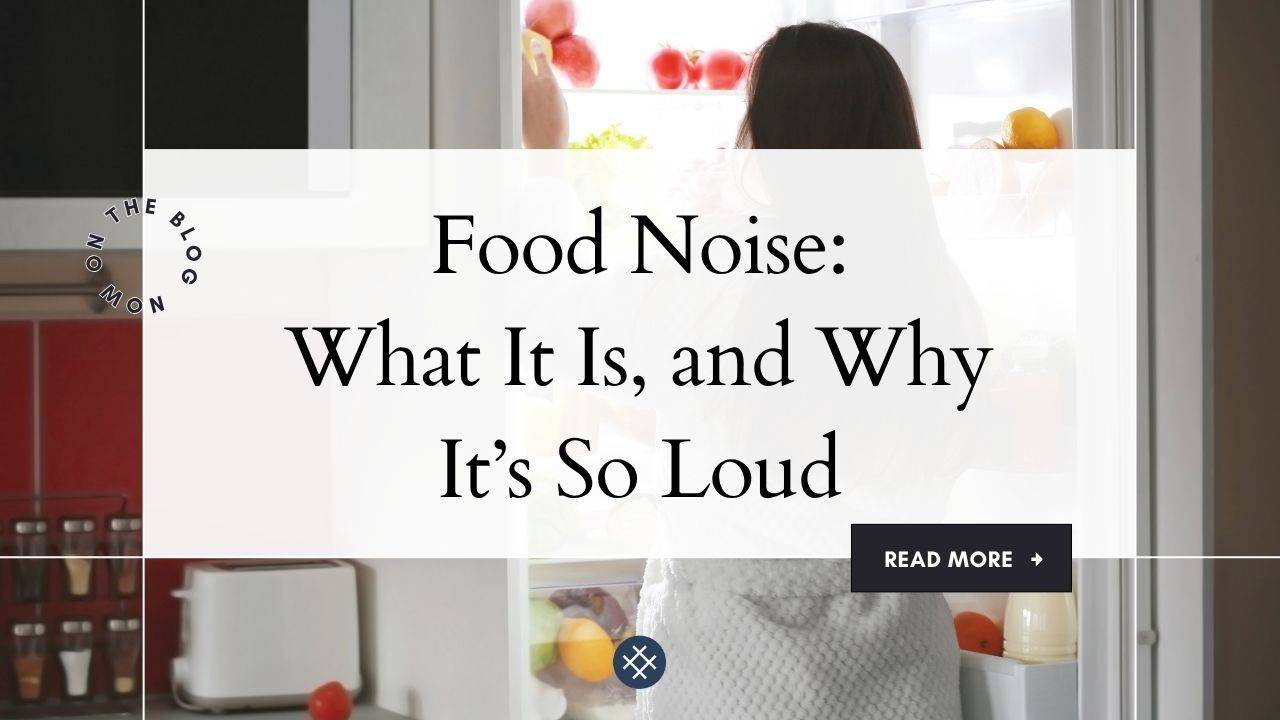
Have you ever stood in front of the fridge after eating a full meal, not because you were hungry, but because your brain kept telling you to look for something? Or maybe you've spent an entire beach day thinking about your body instead of enjoying the people around you.
If that sounds familiar, you're not alone.
Today we're talking about food noise—what it is, why so many women over 50 experience it, and why I believe it's often pointing to something much deeper than food itself.
As an emotional weight loss coach, I help women lose weight with their brains. That means we don't just look at what you're eating. We look at why your brain keeps returning to food in the first place.
What Is Food Noise?
The clinical definition of food noise is the constant mental chatter about food, eating, cravings, or your next meal—even when you're not physically hungry.
Many people describe it as:
- Thinking about what you'll eat next before you've finished your current meal.
- Constantly planning food.
- Feeling distracted by cravings.
- Standing in front of the fridge without knowing what you're looking for.
This is one of the reasons medications like GLP-1s have received so much attention. Many people report that these medications quiet their food noise, giving them relief from the constant thoughts about food.
That experience is real.
But in my coaching, I've noticed something interesting.
While the thoughts may be about food, they often seem to be connected to something much deeper.
My Perspective on Food Noise
I want to be clear that what I'm about to share is my coaching perspective—not the clinical definition.
Over the years, I've worked with hundreds of women who struggle with emotional eating. What I've found is that food noise is often the surface symptom of deeper emotional patterns.
The thoughts sound like they're about food, but underneath, they may be about acceptance.
They may be about safety.
They may be about belonging.
For example, maybe you aren't just thinking:
"Should I eat the cookie?"
Maybe your brain is really saying:
"If I don't lose weight, people will judge me."
"I don't want anyone to see me in a swimsuit."
"I can't relax until my body looks different."
The conversation starts with food, but it often ends with your worth.
Signs You May Be Experiencing Food Noise
You might recognize yourself in some of these:
- You think about food all day long.
- You finish eating and immediately wonder what's next.
- You constantly check what's in your pantry or refrigerator.
- You feel anxious if there isn't a plan for meals.
- You eat when you're stressed, lonely, overwhelmed, or disappointed.
- You can't enjoy vacation because you're thinking about your body.
- You change outfits several times before leaving the house because you're trying to hide your body.
- You tell yourself you'll enjoy life once you've lost weight.
If several of these resonate with you, you're not failing.
Your brain is trying to solve a problem.
The question is: What problem is it actually trying to solve?
Why Does Food Noise Happen?
I believe every behavior makes sense once we understand what it's trying to accomplish.
Our brains are wired for survival.
One of the strongest human needs is belonging. We want to feel accepted, loved, and safe within our community.
For decades, women have been taught that our bodies determine our value.
We've been told thinner is better.
Younger is better.
Smaller is better.
So it makes perfect sense that your brain starts monitoring your body as though it's monitoring your safety.
You walk into a room.
Your brain immediately asks:
"Do I look okay?"
"What will people think?"
"Am I acceptable?"
That's exhausting.
And when your brain believes your body determines whether you'll be accepted, food noise can become louder because food and weight feel connected to your survival.
Again, this isn't the clinical definition of food noise. It's my observation of what often fuels it for many women.
Food Noise Isn't the Enemy
This is one of the biggest mindset shifts I teach inside Love Yourself Thin.
Instead of seeing food noise as something to fight, what if you became curious about it?
Instead of saying,
"Why am I like this?"
Try asking,
"What is my brain trying to protect me from?"
That one question changes everything.
Maybe you're afraid of rejection.
Maybe you're afraid of disappointing people.
Maybe you've learned that being "good" means putting everyone else first.
Maybe you've spent decades believing your body determines your worth.
When you become curious instead of critical, you finally begin solving the real problem.
Why Diets Don't Quiet Food Noise Forever
This is why so many women lose weight and still feel consumed by food.
The outside changed.
The inside didn't.
You can follow another meal plan.
You can count calories.
You can avoid sugar.
But if your brain still believes your worth depends on your weight, food noise often finds another way to keep talking.
That's why willpower isn't enough.
You have to address the thoughts creating the emotional pressure underneath the eating.
How Life Coaching Helps
This is where life coaching becomes so powerful.
As a coach, I'm not diagnosing or treating medical conditions.
Instead, I help women recognize the thinking patterns they've been running for decades—often without realizing it.
Together we ask questions like:
- Why do I keep obsessing over food?
- What am I making my weight mean about me?
- What am I afraid would happen if I stopped worrying about my body?
- Where did these beliefs come from?
- Are these thoughts actually serving me?
Most of our thinking happens automatically.
It's like a cassette tape playing in the background.
Until you hear it, you can't change it.
But once you hear it, you have a choice.
You can begin replacing shame with curiosity.
Fear with compassion.
Perfectionism with progress.
That's where lasting change begins.
Creating a Quieter Mind
Imagine waking up and not thinking about breakfast before your feet hit the floor.
Imagine going to the beach because you want to enjoy your family—not because you've finally earned the right body.
Imagine opening the fridge and realizing you're actually not hungry.
That's the freedom we're really after.
Not simply eating less.
But thinking differently.
Because when your relationship with yourself changes, your relationship with food changes too.
The Bottom Line
The clinical definition of food noise is persistent mental chatter about food, eating, and cravings.
My coaching experience has shown me that while those thoughts are about food, they're often connected to much deeper emotional beliefs about acceptance, safety, belonging, and self-worth.
When you learn to become curious about those deeper patterns instead of criticizing yourself, everything begins to shift. You stop fighting your brain and start understanding it.
And that's where lasting weight loss—and lasting peace—becomes possible.
If you're ready to learn more about how food noise is affecting you, join my free live training. Sign up HERE.
You don’t need another diet or self-help book—you need a breakthrough.
If you’re tired of the weight loss rollercoaster, overwhelmed by your to-do list, or just feeling stuck in your own mind, it’s time to take the first step toward lasting transformation.
🌟 Book a FREE 20-minute Breakthrough Call with Dara Tomasson today.
This is your no-pressure opportunity to get clarity, uncover what’s keeping you stuck, and discover what’s truly possible for you—with the right support.
Stay connected with news and updates!
Join our mailing list to receive the latest news and updates from our team.
Don't worry, your information will not be shared.
We hate SPAM. We will never sell your information, for any reason.
